















What does AI fluency look like on your team?
AI fluency looks different for a software engineer, a data scientist, or a product manager. Tell us about your team, and we'll show you what good looks like for every role.
The AI fluency gap: why clarity is the first step in building an AI-ready workforce

Every company wants an AI-fluent workforce, but few have spelled out what AI fluency means for each role. Andela commissioned FT Longitude to survey 300 senior technology leaders in the US and UK about how their organizations define, measure and build it.
 Research arm of the Financial Times
Key findings
42%
have set AI fluency expectations for specific roles. 60% have a company-wide definition, and the other 40% have no clear definition at all.
56%
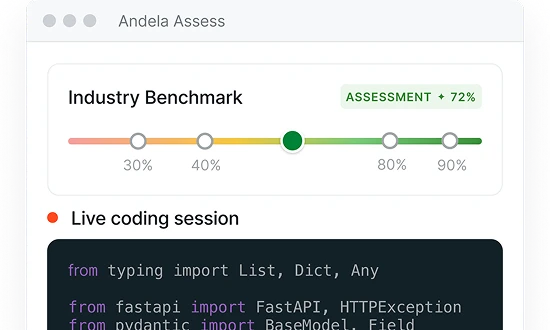
measure AI fluency by training completion and certifications, which says little about how people use AI in their work. 52% assess it through real or simulated tasks.
46%
worry about who would see AI fluency assessment results, and 43% about how those results would reflect on their role.
44%
assess AI skills gaps before training starts, which is what makes tailored training possible. Only 43% offer AI training specific to the role.
90%
more likely to assess skills gaps before training when AI fluency is clearly defined (55% versus 29%). Clear definers also lead on tailored development, practice in real work and role-specific training.
What this means for your team
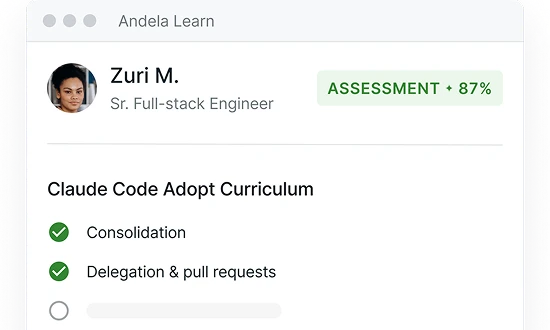
Clarity comes first. Define what AI fluency means for each role, assess people against that definition before training, then build learning around the gaps you find.